

IPFS Upload Tokens: Secure Client-Side Uploads
Learn how signed upload tokens let you safely upload to IPFS from browsers and mobile apps without exposing your API key.
 by Nacho Coll
Nacho founded IPFS.NINJA to make content-addressed storage feel as simple as an S3 PUT — a single API call, a permanent CID, no wallets or peer discovery to reason about.
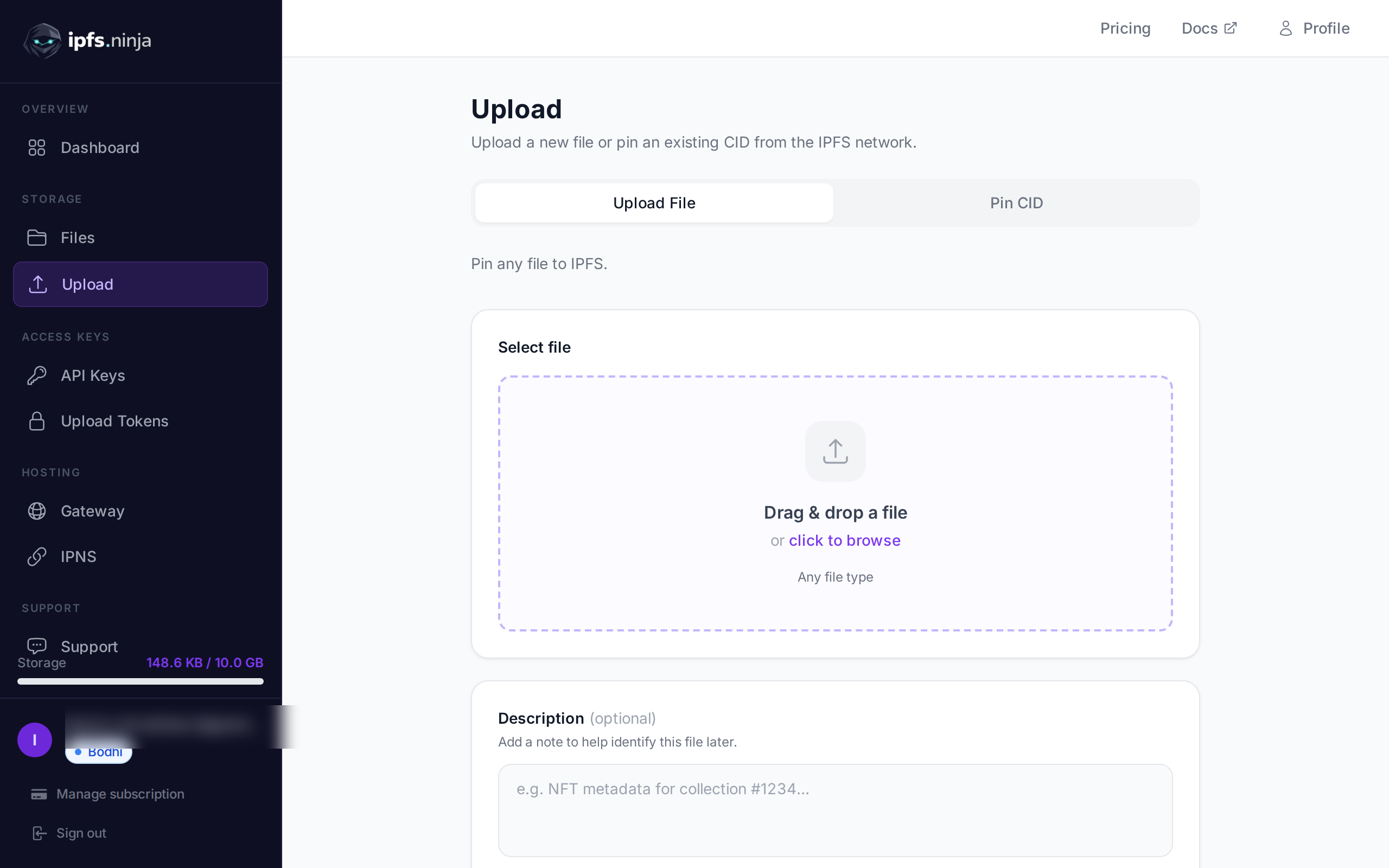
- Generate signed upload tokens server-side so browsers and mobile apps never see your raw API key.
- Tokens carry an expiration timestamp and usage constraints, limiting damage if one is ever extracted.
- Direct client-to-IPFS uploads via tokens remove server bandwidth bottlenecks entirely.
- Cryptographic signatures on each token prevent tampering or forging a fake upload credential.
Building modern web applications often requires uploading files directly from users’ browsers to cloud storage. However, when it comes to IPFS upload security, developers face a challenging dilemma: how do you allow client-side uploads without exposing your precious API keys to potential misuse?
Most IPFS pinning services force you into an uncomfortable choice: either handle all uploads server-side (creating bottlenecks and complexity) or embed your API key in client code (a security nightmare). IPFS.NINJA solves this with a unique feature that no other pinning service offers: signed upload tokens.
How IPFS Upload Tokens Prevent API Key Exposure: A Quick Comparison#
| Approach | API Key in Client? | Auto-expires? | Fine-grained limits? |
|---|---|---|---|
| Embed full API key | Yes (insecure) | No | No |
| Server-side proxy | No | N/A | N/A |
| IPFS.NINJA upload token | No | Yes | Yes |
When building client-side applications that need to upload to IPFS, developers typically encounter several security challenges:
API Key Exposure Risk#
Embedding API keys directly in browser JavaScript means anyone can view your source code and extract your credentials. This could lead to:
- Unauthorized uploads consuming your storage quota
- Potential abuse of your pinning service account
- Security compliance violations in enterprise environments
Server-Side Bottlenecks#
The alternative—routing all uploads through your backend—creates several issues:
- Increased server bandwidth costs
- Higher latency for users
- More complex infrastructure requirements
- Potential single points of failure
Mobile App Security#
Mobile applications face similar challenges, where API keys stored in app bundles can be extracted through reverse engineering.
Introducing IPFS Upload Tokens#
IPFS.NINJA’s signed upload tokens provide a secure middle ground. Here’s how they work:
- Server generates token: Your backend creates a time-limited, signed token using your API key
- Client receives token: The token is safely transmitted to your frontend application
- Direct upload: Clients upload directly to IPFS.NINJA using the signed token
- Automatic expiration: Tokens expire after a set duration, limiting exposure window
This approach combines the security of server-side authentication with the performance benefits of direct client uploads.
Understanding Upload Token Security#
Signed upload tokens use cryptographic signatures to ensure authenticity without exposing your main API key. Each token contains:
- Expiration timestamp: Automatic invalidation after specified duration
- Usage constraints: Optional limits on file count or total size
- Cryptographic signature: Prevents tampering or forgery
- Issuer verification: Links back to your authenticated account
Unlike API keys, upload tokens are designed to be safely embedded in client-side code. Even if extracted, they provide limited access that automatically expires.
Backend Implementation: Express.js Example#
Let’s build a complete example showing how to implement secure client-side IPFS uploads. First, here’s the Express.js backend that generates upload tokens:
// server.js
const express = require('express');
const cors = require('cors');
const app = express();

app.use(express.json());
app.use(cors());

// Your IPFS.NINJA API key (keep this secure on server-side only)
const IPFS_API_KEY = 'bws_1234567890abcdef1234567890abcdef12345678';

// Generate a signed upload token
app.post('/api/generate-upload-token', async (req, res) => {
  try {
    const response = await fetch('https://api.ipfs.ninja/upload/signed-url', {
      method: 'POST',
      headers: {
        'Content-Type': 'application/json',
        'X-Api-Key': IPFS_API_KEY
      },
      body: JSON.stringify({
        expiresIn: '1h', // Token valid for 1 hour
        maxUploads: 10,  // Optional: limit number of uploads
        maxSizeMB: 50    // Optional: limit total upload size
      })
    });

    if (!response.ok) {
      throw new Error(`HTTP error! status: ${response.status}`);
    }

    const tokenData = await response.json();

    res.json({
      success: true,
      uploadToken: tokenData.token,
      expiresAt: tokenData.expiresAt
    });
  } catch (error) {
    console.error('Token generation failed:', error);
    res.status(500).json({
      success: false,
      error: 'Failed to generate upload token'
    });
  }
});

// Optional: Endpoint to verify uploads completed successfully
app.post('/api/verify-upload', async (req, res) => {
  const { cid } = req.body;

  try {
    // Verify the file was pinned successfully
    const response = await fetch(`https://api.ipfs.ninja/pin/${cid}`, {
      headers: {
        'X-Api-Key': IPFS_API_KEY
      }
    });

    const pinData = await response.json();

    res.json({
      success: true,
      verified: pinData.pinned,
      metadata: pinData
    });
  } catch (error) {
    res.status(500).json({
      success: false,
      error: 'Verification failed'
    });
  }
});

app.listen(3000, () => {
  console.log('Server running on port 3000');
});
Frontend Implementation: Secure Client Upload#
Now, here’s the frontend code that safely uploads files using the signed token:
<!DOCTYPE html>
<html>
<head>
    <title>Secure IPFS Upload Demo</title>
    <style>
        body { font-family: Arial, sans-serif; max-width: 600px; margin: 50px auto; padding: 20px; }
        .upload-area { border: 2px dashed #ccc; padding: 20px; text-align: center; margin: 20px 0; }
        .upload-area.dragover { border-color: #007cba; background: #f0f8ff; }
        button { background: #007cba; color: white; border: none; padding: 10px 20px; cursor: pointer; }
        .status { margin: 10px 0; padding: 10px; border-radius: 4px; }
        .success { background: #d4edda; color: #155724; }
        .error { background: #f8d7da; color: #721c24; }
        .info { background: #d1ecf1; color: #0c5460; }
    </style>
</head>
<body>
    <h1>Secure IPFS Upload with Signed Tokens</h1>

    <div class="upload-area" id="uploadArea">
        <p>Drag & drop files here or click to select</p>
        <input type="file" id="fileInput" multiple style="display: none;">
        <button onclick="document.getElementById('fileInput').click()">Select Files</button>
    </div>

    <div id="status"></div>
    <div id="results"></div>

    <script>
        class SecureIPFSUploader {
            constructor() {
                this.uploadToken = null;
                this.tokenExpiry = null;
                this.setupEventListeners();
            }

            setupEventListeners() {
                const uploadArea = document.getElementById('uploadArea');
                const fileInput = document.getElementById('fileInput');

                // Drag and drop handlers
                uploadArea.addEventListener('dragover', (e) => {
                    e.preventDefault();
                    uploadArea.classList.add('dragover');
                });

                uploadArea.addEventListener('dragleave', () => {
                    uploadArea.classList.remove('dragover');
                });

                uploadArea.addEventListener('drop', (e) => {
                    e.preventDefault();
                    uploadArea.classList.remove('dragover');
                    this.handleFiles(Array.from(e.dataTransfer.files));
                });

                // File input handler
                fileInput.addEventListener('change', (e) => {
                    this.handleFiles(Array.from(e.target.files));
                });
            }

            async getUploadToken() {
                // Check if we have a valid token
                if (this.uploadToken && this.tokenExpiry && new Date() < new Date(this.tokenExpiry)) {
                    return this.uploadToken;
                }

                try {
                    this.showStatus('Generating secure upload token...', 'info');

                    const response = await fetch('/api/generate-upload-token', {
                        method: 'POST',
                        headers: {
                            'Content-Type': 'application/json'
                        }
                    });

                    if (!response.ok) {
                        throw new Error(`Failed to generate token: ${response.statusText}`);
                    }

                    const data = await response.json();

                    if (!data.success) {
                        throw new Error(data.error || 'Token generation failed');
                    }

                    this.uploadToken = data.uploadToken;
                    this.tokenExpiry = data.expiresAt;

                    return this.uploadToken;
                } catch (error) {
                    this.showStatus(`Token generation failed: ${error.message}`, 'error');
                    throw error;
                }
            }

            async uploadFile(file) {
                try {
                    const token = await this.getUploadToken();

                    // Convert file to base64 for JSON transport
                    const fileBase64 = await this.fileToBase64(file);

                    this.showStatus(`Uploading ${file.name} to IPFS...`, 'info');

                    const response = await fetch('https://api.ipfs.ninja/upload/new', {
                        method: 'POST',
                        headers: {
                            'Content-Type': 'application/json',
                            'Authorization': `Signed ${token}`
                        },
                        body: JSON.stringify({
                            content: fileBase64,
                            description: `File uploaded via secure token: ${file.name}`,
                            metadata: {
                                filename: file.name,
                                fileType: file.type,
                                uploadedAt: new Date().toISOString(),
                                uploadMethod: 'signed-token'
                            }
                        })
                    });

                    if (!response.ok) {
                        const errorText = await response.text();
                        throw new Error(`Upload failed: ${response.status} ${errorText}`);
                    }

                    const result = await response.json();

                    return {
                        success: true,
                        filename: file.name,
                        cid: result.cid,
                        size: result.sizeMB,
                        ipfsUri: result.uris.ipfs,
                        httpUrl: result.uris.url
                    };
                } catch (error) {
                    return {
                        success: false,
                        filename: file.name,
                        error: error.message
                    };
                }
            }

            async handleFiles(files) {
                if (files.length === 0) return;

                this.clearResults();

                try {
                    // Upload files concurrently
                    const uploadPromises = files.map(file => this.uploadFile(file));
                    const results = await Promise.all(uploadPromises);

                    this.displayResults(results);

                    const successful = results.filter(r => r.success).length;
                    const total = results.length;

                    if (successful === total) {
                        this.showStatus(`✅ Successfully uploaded ${successful} file(s) to IPFS!`, 'success');
                    } else {
                        this.showStatus(`⚠️ Uploaded ${successful}/${total} files. Check results below.`, 'error');
                    }
                } catch (error) {
                    this.showStatus(`Upload failed: ${error.message}`, 'error');
                }
            }

            fileToBase64(file) {
                return new Promise((resolve, reject) => {
                    const reader = new FileReader();
                    reader.readAsDataURL(file);
                    reader.onload = () => {
                        // Remove the data:mime/type;base64, prefix
                        const base64 = reader.result.split(',')[1];
                        resolve(base64);
                    };
                    reader.onerror = error => reject(error);
                });
            }

            showStatus(message, type) {
                const statusDiv = document.getElementById('status');
                statusDiv.className = `status ${type}`;
                statusDiv.textContent = message;
            }

            displayResults(results) {
                const resultsDiv = document.getElementById('results');

                resultsDiv.innerHTML = '<h3>Upload Results:</h3>' +
                    results.map(result => `
                        <div class="status ${result.success ? 'success' : 'error'}" style="margin: 10px 0;">
                            <strong>${result.filename}</strong><br>
                            ${result.success ?
                                `✅ CID: ${result.cid}<br>
                                 📊 Size: ${result.size} MB<br>
                                 🔗 URL: <a href="${result.httpUrl}" target="_blank">${result.httpUrl}</a>` :
                                `❌ Error: ${result.error}`
                            }
                        </div>
                    `).join('');
            }

            clearResults() {
                document.getElementById('results').innerHTML = '';
            }
        }

        // Initialize the uploader
        const uploader = new SecureIPFSUploader();
    </script>
</body>
</html>
Advanced Security Considerations#
When implementing IPFS upload security with signed tokens, consider these additional security measures:
Token Scope Limitations#
Configure tokens with appropriate restrictions:
// Generate token with specific constraints
const restrictedToken = await fetch('https://api.ipfs.ninja/upload/signed-url', {
  method: 'POST',
  headers: {
    'X-Api-Key': IPFS_API_KEY
  },
  body: JSON.stringify({
    expiresIn: '30m',        // Short expiration
    maxUploads: 5,           // Limited upload count
    maxSizeMB: 10,          // Size restriction
    allowedMimeTypes: ['image/jpeg', 'image/png'], // File type restrictions
    ipWhitelist: ['192.168.1.0/24'] // IP-based access control
  })
});
Content Validation#
Always validate uploaded content on your backend:
app.post('/api/validate-upload', async (req, res) => {
  const { cid } = req.body;

  try {
    // Fetch and validate the uploaded content
    const response = await fetch(`https://ipfs.ninja/ipfs/${cid}`);
    const contentType = response.headers.get('content-type');

    // Implement your validation logic
    if (!isValidContentType(contentType)) {
      // Remove invalid content
      await deleteFromIPFS(cid);
      return res.status(400).json({ error: 'Invalid content type' });
    }

    res.json({ success: true, validated: true });
  } catch (error) {
    res.status(500).json({ error: 'Validation failed' });
  }
});
Rate Limiting#
Implement additional rate limiting on your token generation endpoint:
const rateLimit = require('express-rate-limit');

const tokenLimiter = rateLimit({
  windowMs: 15 * 60 * 1000, // 15 minutes
  max: 10, // Limit each IP to 10 token requests per windowMs
  message: 'Too many token requests, please try again later'
});

app.use('/api/generate-upload-token', tokenLimiter);
Benefits Over Traditional Approaches#
Signed upload tokens provide several advantages over alternative IPFS upload security methods:
vs. Server-Side Proxying#
- Performance: Direct uploads eliminate server bandwidth usage
- Scalability: No server bottlenecks during high upload periods
- Cost: Reduced bandwidth and processing costs
- User Experience: Better upload speeds and progress tracking
vs. Client-Side API Keys#
- Security: No risk of API key extraction or misuse
- Compliance: Meets security audit requirements
- Access Control: Fine-grained permissions and automatic expiration
- Monitoring: Better tracking of upload sources and patterns
vs. Other Pinning Services#
IPFS.NINJA is currently the only major pinning service offering signed upload tokens. Competitors like Pinata require either server-side proxying or client-side API key exposure, making this a unique differentiator.
For more details on how IPFS.NINJA compares to other services, check out our comprehensive comparison guide.
Production Deployment Tips#
When deploying signed upload tokens in production:
Environment Configuration#
Store sensitive configuration securely:
// Use environment variables for production
const config = {
  ipfsApiKey: process.env.IPFS_API_KEY,
  tokenExpiry: process.env.UPLOAD_TOKEN_EXPIRY || '1h',
  maxFileSize: process.env.MAX_FILE_SIZE_MB || 50,
  allowedOrigins: process.env.ALLOWED_ORIGINS?.split(',') || ['localhost:3000']
};
Monitoring and Logging#
Implement comprehensive logging for security monitoring:
const winston = require('winston');

const logger = winston.createLogger({
  level: 'info',
  format: winston.format.json(),
  transports: [
    new winston.transports.File({ filename: 'upload-security.log' })
  ]
});

// Log token generation
logger.info('Upload token generated', {
  userId: req.user.id,
  clientIP: req.ip,
  userAgent: req.get('User-Agent'),
  expiresAt: tokenData.expiresAt
});
Error Handling#
Implement robust error handling that doesn’t leak sensitive information:
app.use((error, req, res, next) => {
  // Log full error details server-side
  logger.error('Upload token error', {
    error: error.message,
    stack: error.stack,
    userId: req.user?.id,
    endpoint: req.path
  });

  // Send safe error message to client
  res.status(500).json({
    success: false,
    error: 'An internal error occurred. Please try again.'
  });
});
Integration with Popular Frameworks#
Signed upload tokens work seamlessly with modern web frameworks. Here are quick integration examples:
React Hook#
import { useState, useCallback } from 'react';

export function useSecureIPFSUpload() {
  const [uploading, setUploading] = useState(false);
  const [uploadToken, setUploadToken] = useState(null);

  const getToken = useCallback(async () => {
    if (uploadToken?.expiresAt && new Date() < new Date(uploadToken.expiresAt)) {
      return uploadToken.token;
    }

    const response = await fetch('/api/generate-upload-token', {
      method: 'POST'
    });
    const data = await response.json();
    setUploadToken(data);
    return data.uploadToken;
  }, [uploadToken]);

  const uploadFile = useCallback(async (file) => {
    setUploading(true);
    try {
      const token = await getToken();
      // Upload logic here...
    } finally {
      setUploading(false);
    }
  }, [getToken]);

  return { uploadFile, uploading };
}
Vue.js Composable#
import { ref } from 'vue';

export function useSecureUpload() {
  const uploading = ref(false);
  const uploadProgress = ref(0);

  const uploadFile = async (file) => {
    uploading.value = true;
    // Implementation here...
  };

  return {
    uploading: readonly(uploading),
    uploadProgress: readonly(uploadProgress),
    uploadFile
  };
}Conclusion#
Signed upload tokens solve a critical security challenge in decentralized application development. By providing a secure way to enable direct client-side uploads to IPFS without exposing API keys, they open up new architectural possibilities for modern web applications.
Whether you’re building a content management system, NFT marketplace, or any application requiring secure file uploads, IPFS.NINJA’s upload tokens provide the security and flexibility you need. The implementation is straightforward, the security benefits are significant, and the performance gains are substantial.
To learn more about IPFS fundamentals, check out our guide on what is IPFS pinning or explore our complete API tutorial. For developers evaluating different options, our best IPFS pinning services comparison provides comprehensive insights.
Ready to implement secure client-side IPFS uploads in your application? The combination of modern security practices and decentralized storage makes this approach ideal for production applications that need to scale while maintaining security standards.
Ready to start pinning? Start your 7-day trial — full Bodhi capacity (10 GB / 200 files / 20 GB bandwidth / 1 dedicated gateway). No credit card required. Then Bodhi $5/mo, Karma $19/mo, or Nirvana $59/mo.
About the author
Nacho Coll
Founder & Engineer at IPFS.NINJA
Nacho founded IPFS.NINJA to make content-addressed storage feel as simple as an S3 PUT — a single API call, a permanent CID, no wallets or peer discovery to reason about. Writes about IPFS internals, decentralized storage patterns, and the pinning-service landscape from the operator side of the wire.