
NFT 元数据存储:面向 NFT 创作者的 IPFS 完整指南
逐步指南:使用 ERC-721 tokenURI 模式将 NFT 元数据存储在 IPFS 上,提供面向 NFT 开发者的 Python 和 JavaScript 代码示例,助力安全可靠地托管 NFT 资产。
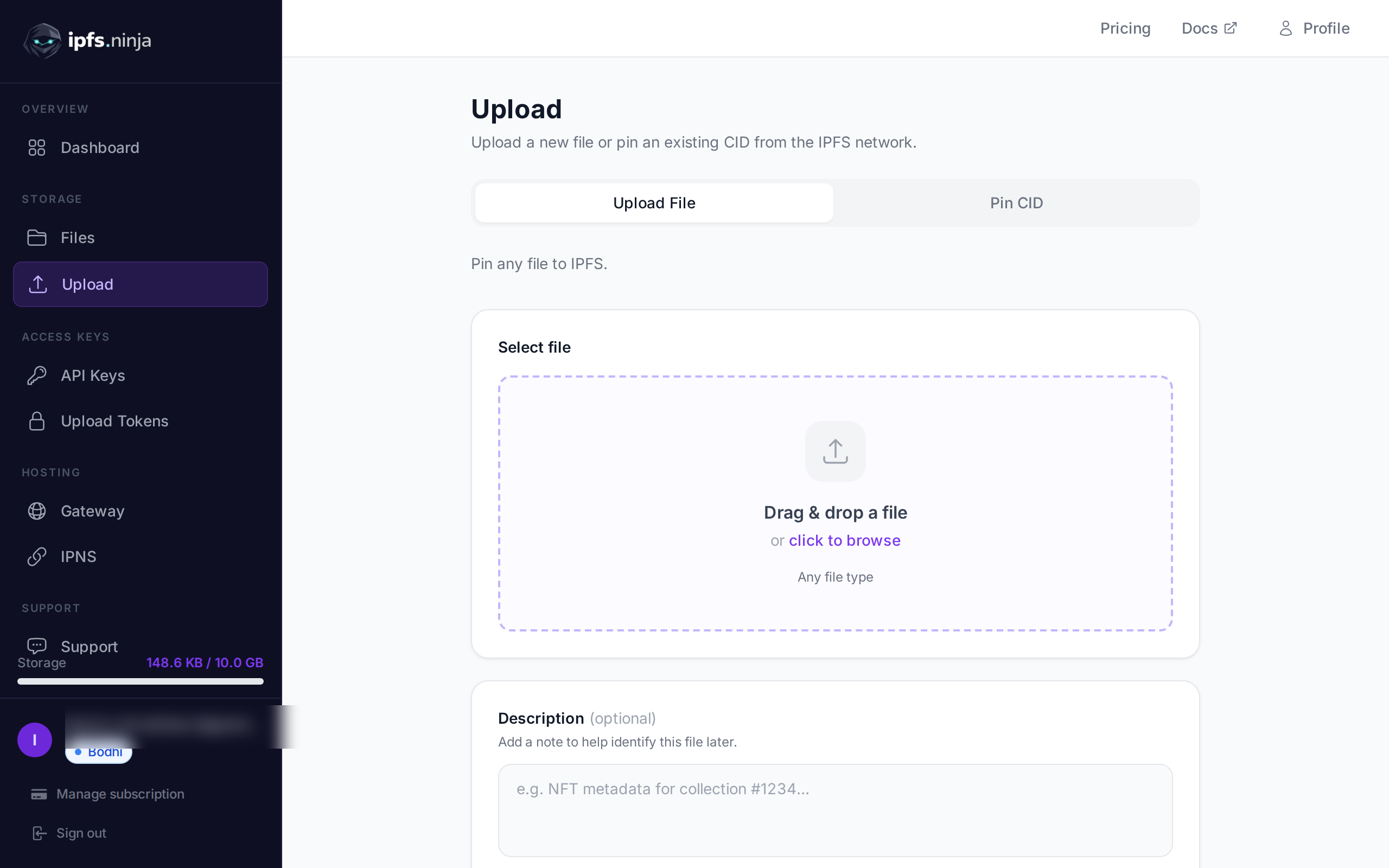
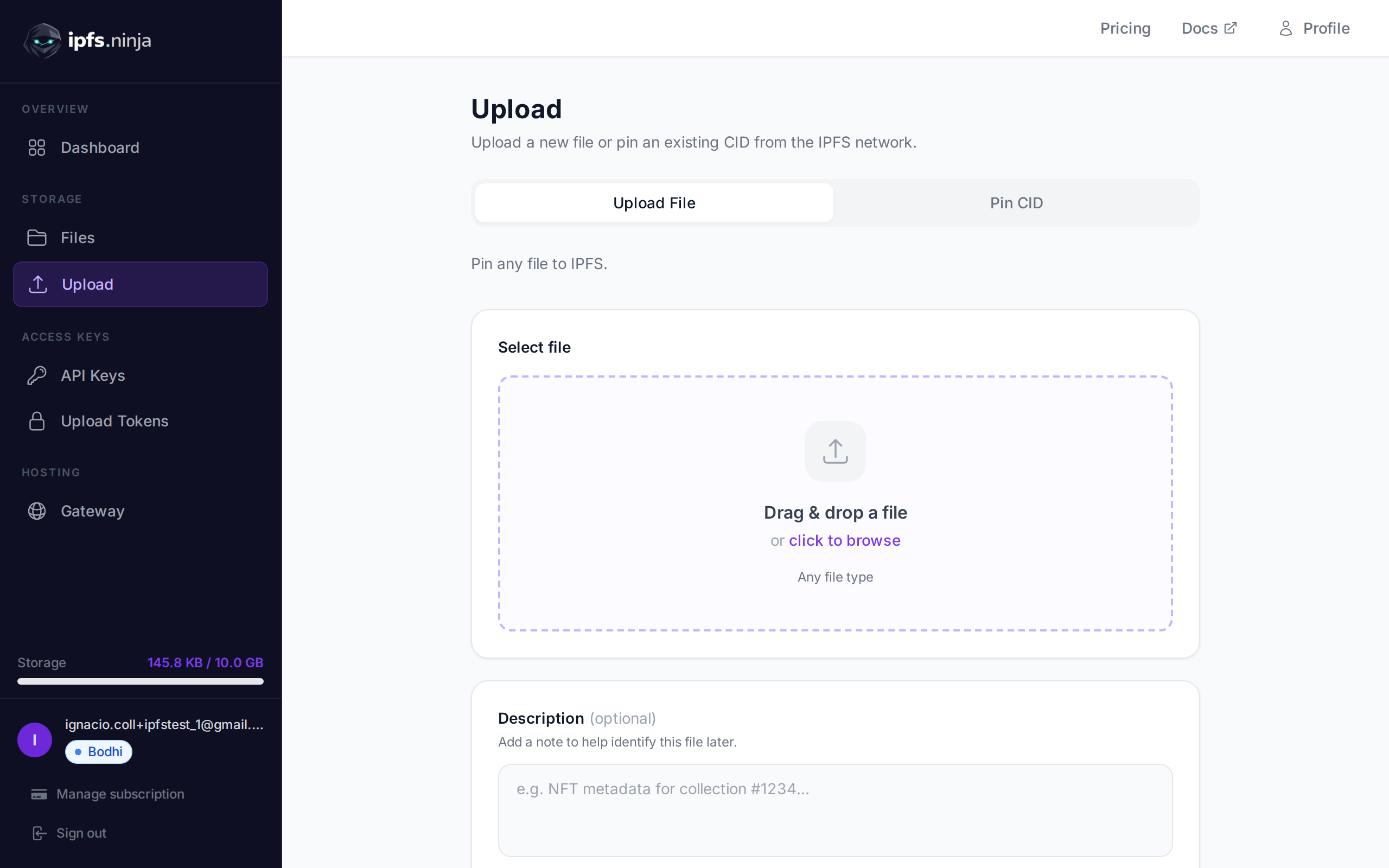
创建 NFT 不仅仅需要部署智能合约——你还需要为元数据和资产提供可靠、去中心化的存储。这份全面的指南将带你逐步完成使用行业最佳实践在 IPFS 上存储 NFT 元数据,并为 Python 和 JavaScript 开发者提供完整的代码示例。
IPFS 如何保护您的 NFT 元数据:中心化主机无法提供的 4 项保障#
传统的 Web 托管会给 NFT 项目带来中心化风险。当元数据保存在常规服务器上时,如果托管服务关闭或更改 URL,NFT 就会变成”损坏”状态。IPFS(星际文件系统)通过以下方式解决了这个问题:
- 不可变的内容寻址:每个文件获得永不改变的唯一 Content Identifier (CID)
- 去中心化存储:内容存在于全球多个节点上
- 加密验证:通过内容哈希保证文件完整性
- 面向未来的 URL:IPFS 链接无限期工作,保护长期价值
要更深入了解 IPFS 基础,请查看我们关于什么是 IPFS pinning 的指南。
理解 ERC-721 元数据结构#
ERC-721 标准定义了 NFT 元数据的结构方式。智能合约的 tokenURI 函数返回一个指向遵循以下模式的 JSON 元数据的 URL:
{
  "name": "My Amazing NFT #1",
  "description": "A unique digital artwork showcasing...",
  "image": "ipfs://QmYourImageCIDHere",
  "attributes": [
    {
      "trait_type": "Background",
      "value": "Blue"
    },
    {
      "trait_type": "Rarity",
      "value": "Common"
    }
  ],
  "external_url": "https://yourproject.com/token/1"
}关键元数据字段#
- name:在钱包和市场中显示的 NFT 标题
- description:有关 NFT 的详细信息
- image:指向主要视觉资产的 IPFS URL
- attributes:用于过滤和稀有度计算的基于特征的属性
- external_url:指向附加内容或项目网站的可选链接
构建符合 ERC-721 标准的 JSON 元数据#
必需的 JSON 结构包含四个核心字段:name(NFT 名称)、description(描述文本)、image(格式为 ipfs://<CID> 的图像地址,而非可变的 HTTP 网关 URL)以及 attributes 数组(每个元素包含 trait_type 和 value 字段,供市场用于筛选与稀有度计算)。使用 ipfs:// 协议而非网关 URL 至关重要——市场和钱包会自行选择网关来解析该协议,即使某个网关下线,也不会影响元数据的可访问性。
下面是构建并上传符合标准的元数据 JSON 的完整 Python 示例,包含 base64 编码和向 IPFS.NINJA API 发送 POST 请求的完整代码:
import requests
import base64
import json

def build_and_upload_erc721_metadata(name, description, image_cid, attributes, api_key):
    """Build an ERC-721-compliant metadata JSON object and pin it to IPFS."""

    metadata = {
        "name": name,
        "description": description,
        "image": f"ipfs://{image_cid}",
        "attributes": attributes,
    }

    metadata_json = json.dumps(metadata, indent=2, ensure_ascii=False)
    metadata_b64 = base64.b64encode(metadata_json.encode("utf-8")).decode("utf-8")

    response = requests.post(
        "https://api.ipfs.ninja/upload/new",
        headers={
            "Content-Type": "application/json",
            "X-Api-Key": api_key,
        },
        json={
            "content": metadata_b64,
            "description": f"ERC-721 metadata: {name}",
            "metadata": {"contentType": "application/json"},
        },
    )

    if response.status_code == 200:
        result = response.json()
        print(f"Metadata CID: {result['cid']}")
        return result["cid"]

    raise RuntimeError(f"Metadata upload failed: {response.text}")
在 Etherscan 和 OpenSea 上验证 tokenURI#
部署合约并铸造 NFT 后,务必验证 tokenURI 是否正确指向你上传的元数据。在 Etherscan 上打开你的合约地址,进入 Read Contract 标签页,找到 tokenURI 方法,输入对应的 tokenId 并查询——返回值应为 ipfs://<CID> 格式的字符串,而不是空值或错误的网关 URL。
OpenSea 等市场在展示 NFT 时会读取这个 tokenURI,再自行选择一个公共网关(例如 https://ipfs.io/ipfs/<CID>)来解析 ipfs:// 协议并抓取 JSON 元数据和图片——你不需要在合约里写死任何具体网关地址。
如果市场页面仍然显示旧的图片或属性,通常是市场自身缓存了旧的元数据快照,而不是 IPFS 端的问题。此时可以:
- 在 OpenSea 的 NFT 详情页点击 Refresh metadata(通常在右上角的 ⋯ 菜单中)
- 等待几分钟,让市场重新抓取
tokenURI指向的最新 JSON - 如果仍未更新,确认合约里的
tokenURI确实返回了新的 CID,而不是旧 CID 的缓存值
IPFS NFT 存储的分步流程#
第 1 步:准备你的资产和元数据#
在上传任何内容之前,先组织好你的文件:
- 主要资产:图像、视频或其他主要内容
- 元数据文件:描述每个 NFT 的 JSON 文件
- 集合元数据:可选的集合级别信息
第 2 步:将资产上传到 IPFS#
首先上传你的主要 NFT 资产(图像、视频等)以获取它们的 IPFS CID。你将在元数据 JSON 文件中引用这些 CID。
下面是使用 Python 上传图像的方法:
import requests
import base64
import json

def upload_image_to_ipfs(image_path, api_key):
    """Upload an image file to IPFS and return its CID"""

    # Read and encode image
    with open(image_path, 'rb') as f:
        image_data = base64.b64encode(f.read()).decode('utf-8')

    # Prepare upload payload
    payload = {
        "content": image_data,
        "description": f"NFT Asset: {image_path}"
    }

    headers = {
        "Content-Type": "application/json",
        "X-Api-Key": api_key
    }

    # Upload to IPFS.NINJA
    response = requests.post(
        "https://api.ipfs.ninja/upload/new",
        headers=headers,
        json=payload
    )

    if response.status_code == 200:
        result = response.json()
        print(f"✅ Image uploaded successfully!")
        print(f"CID: {result['cid']}")
        print(f"IPFS URL: {result['uris']['ipfs']}")
        print(f"Gateway URL: {result['uris']['url']}")
        return result['cid']
    else:
        print(f"❌ Upload failed: {response.text}")
        return None

# Example usage
API_KEY = "bws_1234567890abcdef1234567890abcdef"  # Replace with your actual key
image_cid = upload_image_to_ipfs("my-nft-artwork.png", API_KEY)
第 3 步:创建并上传元数据 JSON#
获得资产 CID 后,创建元数据 JSON 文件并上传:
def create_and_upload_metadata(name, description, image_cid, attributes, api_key):
    """Create NFT metadata JSON and upload to IPFS"""

    # Create metadata object
    metadata = {
        "name": name,
        "description": description,
        "image": f"ipfs://{image_cid}",
        "attributes": attributes
    }

    # Convert to JSON string and encode
    metadata_json = json.dumps(metadata, indent=2)
    metadata_b64 = base64.b64encode(metadata_json.encode('utf-8')).decode('utf-8')

    # Upload metadata
    payload = {
        "content": metadata_b64,
        "description": f"NFT Metadata: {name}",
        "metadata": {
            "contentType": "application/json",
            "nftTokenId": name.split('#')[1] if '#' in name else "1"
        }
    }

    headers = {
        "Content-Type": "application/json",
        "X-Api-Key": api_key
    }

    response = requests.post(
        "https://api.ipfs.ninja/upload/new",
        headers=headers,
        json=payload
    )

    if response.status_code == 200:
        result = response.json()
        print(f"✅ Metadata uploaded successfully!")
        print(f"Metadata CID: {result['cid']}")
        return result['cid']
    else:
        print(f"❌ Metadata upload failed: {response.text}")
        return None

# Example usage
attributes = [
    {"trait_type": "Background", "value": "Cosmic Blue"},
    {"trait_type": "Eyes", "value": "Laser"},
    {"trait_type": "Rarity", "value": "Epic"}
]

metadata_cid = create_and_upload_metadata(
    name="Cosmic Warrior #001",
    description="A fierce warrior from the distant galaxies, wielding the power of stars.",
    image_cid=image_cid,
    attributes=attributes,
    api_key=API_KEY
)
第 4 步:JavaScript 实现#
对于 Web 应用程序或 Node.js 项目,这里是 JavaScript 版本:
class NFTStorage {
    constructor(apiKey) {
        this.apiKey = apiKey;
        this.baseUrl = 'https://api.ipfs.ninja';
    }

    async uploadFile(fileContent, description) {
        const payload = {
            content: fileContent, // base64 encoded
            description: description
        };

        const response = await fetch(`${this.baseUrl}/upload/new`, {
            method: 'POST',
            headers: {
                'Content-Type': 'application/json',
                'X-Api-Key': this.apiKey
            },
            body: JSON.stringify(payload)
        });

        if (!response.ok) {
            throw new Error(`Upload failed: ${response.statusText}`);
        }

        return await response.json();
    }

    async uploadImageFromFile(file) {
        return new Promise((resolve, reject) => {
            const reader = new FileReader();
            reader.onload = async (e) => {
                try {
                    const base64Content = e.target.result.split(',')[1]; // Remove data:image/...;base64, prefix
                    const result = await this.uploadFile(base64Content, `NFT Image: ${file.name}`);
                    resolve(result.cid);
                } catch (error) {
                    reject(error);
                }
            };
            reader.readAsDataURL(file);
        });
    }

    async uploadMetadata(name, description, imageCid, attributes = []) {
        const metadata = {
            name,
            description,
            image: `ipfs://${imageCid}`,
            attributes
        };

        const metadataJson = JSON.stringify(metadata, null, 2);
        const base64Metadata = btoa(metadataJson);

        const result = await this.uploadFile(base64Metadata, `NFT Metadata: ${name}`);
        return result.cid;
    }
}

// Usage example
const storage = new NFTStorage('bws_1234567890abcdef1234567890abcdef'); // Replace with your key

// Upload process
async function createNFT() {
    try {
        // Assuming you have a file input element
        const fileInput = document.getElementById('nft-image');
        const imageFile = fileInput.files[0];

        console.log('Uploading image...');
        const imageCid = await storage.uploadImageFromFile(imageFile);
        console.log(`Image uploaded: ${imageCid}`);

        console.log('Uploading metadata...');
        const metadataCid = await storage.uploadMetadata(
            'Galaxy Explorer #042',
            'A mysterious explorer traversing the cosmic void.',
            imageCid,
            [
                { trait_type: 'Class', value: 'Explorer' },
                { trait_type: 'Galaxy', value: 'Andromeda' },
                { trait_type: 'Rarity', value: 'Legendary' }
            ]
        );

        console.log(`Metadata uploaded: ${metadataCid}`);
        console.log(`Token URI: ipfs://${metadataCid}`);

    } catch (error) {
        console.error('Upload failed:', error);
    }
}
在智能合约中实现 tokenURI#
一旦你的元数据上传到 IPFS,在 ERC-721 合约中实现 tokenURI 函数:
// SPDX-License-Identifier: MIT
pragma solidity ^0.8.0;

import "@openzeppelin/contracts/token/ERC721/ERC721.sol";
import "@openzeppelin/contracts/access/Ownable.sol";

contract MyNFTCollection is ERC721, Ownable {
    mapping(uint256 => string) private _tokenURIs;
    string private _baseTokenURI;

    constructor(string memory name, string memory symbol) ERC721(name, symbol) {}

    function setTokenURI(uint256 tokenId, string memory uri) external onlyOwner {
        require(_exists(tokenId), "Token does not exist");
        _tokenURIs[tokenId] = uri;
    }

    function setBaseURI(string memory baseURI) external onlyOwner {
        _baseTokenURI = baseURI;
    }

    function tokenURI(uint256 tokenId) public view virtual override returns (string) {
        require(_exists(tokenId), "Token does not exist");

        string memory _tokenURI = _tokenURIs[tokenId];

        // Return specific token URI if set
        if (bytes(_tokenURI).length > 0) {
            return _tokenURI;
        }

        // Fall back to base URI + token ID pattern
        if (bytes(_baseTokenURI).length > 0) {
            return string(abi.encodePacked(_baseTokenURI, tokenId.toString()));
        }

        return "";
    }

    function mintWithURI(address to, uint256 tokenId, string memory uri) external onlyOwner {
        _mint(to, tokenId);
        _tokenURIs[tokenId] = uri;
    }
}大型集合的批量操作#
对于大型 NFT 集合,批量操作可以节省时间和 gas 成本:
def batch_upload_collection(collection_data, api_key):
    """Upload an entire NFT collection in batches"""

    print(f"Starting batch upload of {len(collection_data)} NFTs...")
    results = []

    for i, nft_data in enumerate(collection_data):
        print(f"Processing NFT {i+1}/{len(collection_data)}: {nft_data['name']}")

        try:
            # Upload image
            image_cid = upload_image_to_ipfs(nft_data['image_path'], api_key)

            if image_cid:
                # Upload metadata
                metadata_cid = create_and_upload_metadata(
                    name=nft_data['name'],
                    description=nft_data['description'],
                    image_cid=image_cid,
                    attributes=nft_data['attributes'],
                    api_key=api_key
                )

                if metadata_cid:
                    results.append({
                        'token_id': i + 1,
                        'name': nft_data['name'],
                        'image_cid': image_cid,
                        'metadata_cid': metadata_cid,
                        'token_uri': f"ipfs://{metadata_cid}"
                    })

        except Exception as e:
            print(f"❌ Error processing {nft_data['name']}: {e}")

    print(f"✅ Batch upload complete! {len(results)} NFTs processed successfully.")
    return results

# Example collection data
collection_data = [
    {
        'name': 'Cosmic Warrior #001',
        'description': 'A fierce warrior from distant galaxies.',
        'image_path': 'images/warrior_001.png',
        'attributes': [
            {'trait_type': 'Class', 'value': 'Warrior'},
            {'trait_type': 'Rarity', 'value': 'Epic'}
        ]
    },
    # Add more NFTs...
]

results = batch_upload_collection(collection_data, API_KEY)
NFT 元数据存储的最佳实践#
1. 使用描述性文件名#
上传到 IPFS 时,使用有意义的描述来帮助组织:
payload = {
    "content": base64_content,
    "description": f"Collection: {collection_name} | Token: {token_id} | Type: {file_type}"
}
2. 实现适当的错误处理#
始终优雅地处理上传失败:
import time

def upload_with_retry(upload_function, max_retries=3, delay=2):
    """Upload with exponential backoff retry logic"""

    for attempt in range(max_retries):
        try:
            return upload_function()
        except Exception as e:
            if attempt == max_retries - 1:
                raise e
            print(f"Attempt {attempt + 1} failed: {e}. Retrying in {delay} seconds...")
            time.sleep(delay)
            delay *= 2  # Exponential backoff
3. 验证元数据结构#
确保你的元数据符合标准:
def validate_metadata(metadata):
    """Validate NFT metadata structure"""
    required_fields = ['name', 'description', 'image']

    for field in required_fields:
        if field not in metadata:
            raise ValueError(f"Missing required field: {field}")

    if not metadata['image'].startswith('ipfs://'):
        raise ValueError("Image must be an IPFS URL")

    if 'attributes' in metadata:
        for attr in metadata['attributes']:
            if 'trait_type' not in attr or 'value' not in attr:
                raise ValueError("Invalid attribute structure")

    return True
选择合适的 IPFS pinning 服务#
为你的 NFT 项目选择 IPFS pinning 服务时,需要考虑:
- 可靠性:长期存储的保证正常运行时间
- 性能:全球范围的快速检索速度
- 价格:对你的集合规模具有成本效益
- 功能:API 能力、分析和开发者工具
要详细比较 pinning 服务,请阅读我们的 IPFS Ninja vs Pinata 比较和我们的最佳 IPFS pinning 服务指南。
高级功能:自定义网关和分析#
IPFS Ninja 为专业 NFT 项目提供了额外功能:
自定义网关配置#
为你的集合创建品牌化的 IPFS 网关:
// Access your NFT through a custom gateway
const customGateway = 'https://my-collection.gw.ipfs.ninja';
const nftUrl = `${customGateway}/ipfs/${metadataCid}`;上传分析#
通过仪表盘分析监控你的 NFT 存储使用情况和访问模式,帮助你了解集合性能并优化存储成本。
排查常见问题#
元数据未加载#
- 验证 IPFS URL 使用
ipfs://协议 - 检查元数据 JSON 有效
- 确保 pinning 服务正在维护内容
图像不显示#
- 确认元数据中的图像 CID 正确
- 在 IPFS 网关中测试图像 URL
- 验证图像文件格式与 Web 兼容
Gas 估算错误#
- 确保
tokenURI函数返回有效字符串 - 检查元数据中的循环引用
- 在 minting 之前验证所有 IPFS CID
监控和维护你的 NFT 存储#
部署集合后:
- 定期健康检查:验证元数据和图像保持可访问
- 备份重要的 CID:保留所有上传内容标识符的记录
- 监控分析:跟踪访问模式和存储使用情况
- 规划扩展:随着集合增长,考虑升级你的 pinning 服务
有关以编程方式管理上传的更多详细信息,请参阅我们的 IPFS 上传 API 教程。
结论#
将 NFT 元数据存储在 IPFS 上可确保你的数字资产长期保持可访问性和价值。按照本指南,你已经学会:
- 构建符合 ERC-721 的元数据
- 使用 Python 和 JavaScript 上传资产和元数据
- 实现适当的
tokenURI函数 - 处理大型集合的批量操作
- 应用生产部署的最佳实践
IPFS 的去中心化架构和可靠的 pinning 服务相结合,为经受时间考验的成功 NFT 项目奠定了基础。
准备好开始 pinning 了吗? 创建免费账户 — 50 个文件,1 GB 存储,2 GB 带宽/月。无需信用卡。

关于作者
Nacho Coll
Founder & Engineer at IPFS.NINJA
Nacho founded IPFS.NINJA to make content-addressed storage feel as simple as an S3 PUT — a single API call, a permanent CID, no wallets or peer discovery to reason about. Writes about IPFS internals, decentralized storage patterns, and the pinning-service landscape from the operator side of the wire.