
NFT 메타데이터 저장: NFT 제작자를 위한 IPFS 완벽 가이드
IPFS에 NFT 메타데이터를 저장하는 단계별 가이드. ERC-721 tokenURI 패턴과 Python 및 JavaScript 코드 예제를 포함한 NFT 개발자를 위한 완벽한 안내서.
- NFT 메타데이터를 불변의 콘텐츠 주소 지정 JSON으로 저장하여 tokenURI 링크가 절대 낡지 않도록 하세요.
- 이미지 자산을 먼저 업로드한 다음, 핀 고정하기 전에 해당 CID를 ERC-721 메타데이터 JSON에 삽입하세요.
- 원본 호스팅 서비스가 사라지더라도 IPFS CID는 NFT의 장기적 가치를 보호합니다.
- 암호화 해싱은 NFT 메타데이터의 무결성을 보장합니다 — 어떤 수정이든 다른 CID를 만들어냅니다.
NFT를 만들려면 단순한 스마트 컨트랙트 배포 이상이 필요합니다 — 메타데이터와 자산을 위한 안정적이고 분산화된 저장소가 필요합니다. 이 종합 가이드는 업계 모범 사례를 사용하여 IPFS에 NFT 메타데이터를 저장하는 방법을 Python과 JavaScript 개발자를 위한 코드 예제와 함께 단계별로 안내합니다.
IPFS가 NFT 메타데이터를 보호하는 방법: 중앙화 서버가 제공할 수 없는 4가지 보장#
전통적인 웹 호스팅은 NFT 프로젝트에 중앙화 위험을 만듭니다. 메타데이터가 일반 서버에 있으면 호스팅 서비스가 다운되거나 URL이 변경될 경우 NFT가 “깨질” 수 있습니다. IPFS(InterPlanetary File System)는 다음을 제공함으로써 이를 해결합니다:
- 불변 콘텐츠 주소 지정: 각 파일은 절대 변하지 않는 고유한 Content Identifier(CID)를 받습니다
- 분산 저장소: 콘텐츠는 전 세계 여러 노드에 존재합니다
- 암호학적 검증: 콘텐츠 해싱을 통해 파일 무결성이 보장됩니다
- 미래 보장 URL: IPFS 링크는 무기한 작동하여 장기적 가치를 보호합니다
IPFS 기본에 대한 더 깊은 이해를 위해서는 IPFS 피닝이란 무엇인가 가이드를 확인하세요.
ERC-721 메타데이터 구조 이해하기#
ERC-721 표준은 NFT 메타데이터가 어떻게 구조화되어야 하는지를 정의합니다. 스마트 컨트랙트의 tokenURI 함수는 다음 패턴을 따르는 JSON 메타데이터를 가리키는 URL을 반환합니다:
{
  "name": "My Amazing NFT #1",
  "description": "A unique digital artwork showcasing...",
  "image": "ipfs://QmYourImageCIDHere",
  "attributes": [
    {
      "trait_type": "Background",
      "value": "Blue"
    },
    {
      "trait_type": "Rarity",
      "value": "Common"
    }
  ],
  "external_url": "https://yourproject.com/token/1"
}
주요 메타데이터 필드#
- name: 지갑과 마켓플레이스에 표시되는 NFT 제목
- description: NFT에 대한 자세한 정보
- image: 메인 비주얼 자산에 대한 IPFS URL
- attributes: 필터링 및 희귀도 계산을 위한 특성 기반 속성
- external_url: 추가 콘텐츠 또는 프로젝트 웹사이트에 대한 선택적 링크
단계별 IPFS NFT 저장 프로세스#
1단계: 자산과 메타데이터 준비#
업로드하기 전에 파일을 정리하세요:
- 메인 자산: 이미지, 비디오 또는 기타 주요 콘텐츠
- 메타데이터 파일: 각 NFT를 설명하는 JSON 파일
- 컬렉션 메타데이터: 선택적 컬렉션 수준 정보
2단계: 자산을 IPFS에 업로드#
메인 NFT 자산(이미지, 비디오 등)을 업로드하여 IPFS CID를 얻는 것부터 시작합니다. 메타데이터 JSON 파일에서 이러한 CID를 참조합니다.
Python을 사용하여 이미지를 업로드하는 방법은 다음과 같습니다:
import requests
import base64
import json

def upload_image_to_ipfs(image_path, api_key):
    """Upload an image file to IPFS and return its CID"""

    # Read and encode image
    with open(image_path, 'rb') as f:
        image_data = base64.b64encode(f.read()).decode('utf-8')

    # Prepare upload payload
    payload = {
        "content": image_data,
        "description": f"NFT Asset: {image_path}"
    }

    headers = {
        "Content-Type": "application/json",
        "X-Api-Key": api_key
    }

    # Upload to IPFS.NINJA
    response = requests.post(
        "https://api.ipfs.ninja/upload/new",
        headers=headers,
        json=payload
    )

    if response.status_code == 200:
        result = response.json()
        print(f"✅ Image uploaded successfully!")
        print(f"CID: {result['cid']}")
        print(f"IPFS URL: {result['uris']['ipfs']}")
        print(f"Gateway URL: {result['uris']['url']}")
        return result['cid']
    else:
        print(f"❌ Upload failed: {response.text}")
        return None

# Example usage
API_KEY = "bws_1234567890abcdef1234567890abcdef"  # Replace with your actual key
image_cid = upload_image_to_ipfs("my-nft-artwork.png", API_KEY)
3단계: 메타데이터 JSON 만들기 및 업로드#
자산 CID를 얻으면 메타데이터 JSON 파일을 만들고 업로드합니다:
def create_and_upload_metadata(name, description, image_cid, attributes, api_key):
    """Create NFT metadata JSON and upload to IPFS"""

    # Create metadata object
    metadata = {
        "name": name,
        "description": description,
        "image": f"ipfs://{image_cid}",
        "attributes": attributes
    }

    # Convert to JSON string and encode
    metadata_json = json.dumps(metadata, indent=2)
    metadata_b64 = base64.b64encode(metadata_json.encode('utf-8')).decode('utf-8')

    # Upload metadata
    payload = {
        "content": metadata_b64,
        "description": f"NFT Metadata: {name}",
        "metadata": {
            "contentType": "application/json",
            "nftTokenId": name.split('#')[1] if '#' in name else "1"
        }
    }

    headers = {
        "Content-Type": "application/json",
        "X-Api-Key": api_key
    }

    response = requests.post(
        "https://api.ipfs.ninja/upload/new",
        headers=headers,
        json=payload
    )

    if response.status_code == 200:
        result = response.json()
        print(f"✅ Metadata uploaded successfully!")
        print(f"Metadata CID: {result['cid']}")
        return result['cid']
    else:
        print(f"❌ Metadata upload failed: {response.text}")
        return None

# Example usage
attributes = [
    {"trait_type": "Background", "value": "Cosmic Blue"},
    {"trait_type": "Eyes", "value": "Laser"},
    {"trait_type": "Rarity", "value": "Epic"}
]

metadata_cid = create_and_upload_metadata(
    name="Cosmic Warrior #001",
    description="A fierce warrior from the distant galaxies, wielding the power of stars.",
    image_cid=image_cid,
    attributes=attributes,
    api_key=API_KEY
)
4단계: JavaScript 구현#
웹 애플리케이션이나 Node.js 프로젝트의 경우 JavaScript 버전은 다음과 같습니다:
class NFTStorage {
    constructor(apiKey) {
        this.apiKey = apiKey;
        this.baseUrl = 'https://api.ipfs.ninja';
    }

    async uploadFile(fileContent, description) {
        const payload = {
            content: fileContent, // base64 encoded
            description: description
        };

        const response = await fetch(`${this.baseUrl}/upload/new`, {
            method: 'POST',
            headers: {
                'Content-Type': 'application/json',
                'X-Api-Key': this.apiKey
            },
            body: JSON.stringify(payload)
        });

        if (!response.ok) {
            throw new Error(`Upload failed: ${response.statusText}`);
        }

        return await response.json();
    }

    async uploadImageFromFile(file) {
        return new Promise((resolve, reject) => {
            const reader = new FileReader();
            reader.onload = async (e) => {
                try {
                    const base64Content = e.target.result.split(',')[1]; // Remove data:image/...;base64, prefix
                    const result = await this.uploadFile(base64Content, `NFT Image: ${file.name}`);
                    resolve(result.cid);
                } catch (error) {
                    reject(error);
                }
            };
            reader.readAsDataURL(file);
        });
    }

    async uploadMetadata(name, description, imageCid, attributes = []) {
        const metadata = {
            name,
            description,
            image: `ipfs://${imageCid}`,
            attributes
        };

        const metadataJson = JSON.stringify(metadata, null, 2);
        const base64Metadata = btoa(metadataJson);

        const result = await this.uploadFile(base64Metadata, `NFT Metadata: ${name}`);
        return result.cid;
    }
}

// Usage example
const storage = new NFTStorage('bws_1234567890abcdef1234567890abcdef'); // Replace with your key

// Upload process
async function createNFT() {
    try {
        // Assuming you have a file input element
        const fileInput = document.getElementById('nft-image');
        const imageFile = fileInput.files[0];

        console.log('Uploading image...');
        const imageCid = await storage.uploadImageFromFile(imageFile);
        console.log(`Image uploaded: ${imageCid}`);

        console.log('Uploading metadata...');
        const metadataCid = await storage.uploadMetadata(
            'Galaxy Explorer #042',
            'A mysterious explorer traversing the cosmic void.',
            imageCid,
            [
                { trait_type: 'Class', value: 'Explorer' },
                { trait_type: 'Galaxy', value: 'Andromeda' },
                { trait_type: 'Rarity', value: 'Legendary' }
            ]
        );

        console.log(`Metadata uploaded: ${metadataCid}`);
        console.log(`Token URI: ipfs://${metadataCid}`);

    } catch (error) {
        console.error('Upload failed:', error);
    }
}
스마트 컨트랙트에서 tokenURI 구현하기#
메타데이터가 IPFS에 업로드되면 ERC-721 컨트랙트에 tokenURI 함수를 구현합니다:
// SPDX-License-Identifier: MIT
pragma solidity ^0.8.0;

import "@openzeppelin/contracts/token/ERC721/ERC721.sol";
import "@openzeppelin/contracts/access/Ownable.sol";

contract MyNFTCollection is ERC721, Ownable {
    mapping(uint256 => string) private _tokenURIs;
    string private _baseTokenURI;

    constructor(string memory name, string memory symbol) ERC721(name, symbol) {}

    function setTokenURI(uint256 tokenId, string memory uri) external onlyOwner {
        require(_exists(tokenId), "Token does not exist");
        _tokenURIs[tokenId] = uri;
    }

    function setBaseURI(string memory baseURI) external onlyOwner {
        _baseTokenURI = baseURI;
    }

    function tokenURI(uint256 tokenId) public view virtual override returns (string) {
        require(_exists(tokenId), "Token does not exist");

        string memory _tokenURI = _tokenURIs[tokenId];

        // Return specific token URI if set
        if (bytes(_tokenURI).length > 0) {
            return _tokenURI;
        }

        // Fall back to base URI + token ID pattern
        if (bytes(_baseTokenURI).length > 0) {
            return string(abi.encodePacked(_baseTokenURI, tokenId.toString()));
        }

        return "";
    }

    function mintWithURI(address to, uint256 tokenId, string memory uri) external onlyOwner {
        _mint(to, tokenId);
        _tokenURIs[tokenId] = uri;
    }
}
대규모 컬렉션을 위한 배치 작업#
대규모 NFT 컬렉션의 경우 배치 작업으로 시간과 가스 비용을 절약할 수 있습니다:
def batch_upload_collection(collection_data, api_key):
    """Upload an entire NFT collection in batches"""

    print(f"Starting batch upload of {len(collection_data)} NFTs...")
    results = []

    for i, nft_data in enumerate(collection_data):
        print(f"Processing NFT {i+1}/{len(collection_data)}: {nft_data['name']}")

        try:
            # Upload image
            image_cid = upload_image_to_ipfs(nft_data['image_path'], api_key)

            if image_cid:
                # Upload metadata
                metadata_cid = create_and_upload_metadata(
                    name=nft_data['name'],
                    description=nft_data['description'],
                    image_cid=image_cid,
                    attributes=nft_data['attributes'],
                    api_key=api_key
                )

                if metadata_cid:
                    results.append({
                        'token_id': i + 1,
                        'name': nft_data['name'],
                        'image_cid': image_cid,
                        'metadata_cid': metadata_cid,
                        'token_uri': f"ipfs://{metadata_cid}"
                    })

        except Exception as e:
            print(f"❌ Error processing {nft_data['name']}: {e}")

    print(f"✅ Batch upload complete! {len(results)} NFTs processed successfully.")
    return results

# Example collection data
collection_data = [
    {
        'name': 'Cosmic Warrior #001',
        'description': 'A fierce warrior from distant galaxies.',
        'image_path': 'images/warrior_001.png',
        'attributes': [
            {'trait_type': 'Class', 'value': 'Warrior'},
            {'trait_type': 'Rarity', 'value': 'Epic'}
        ]
    },
    # Add more NFTs...
]

results = batch_upload_collection(collection_data, API_KEY)
NFT 메타데이터 저장 모범 사례#
1. 설명적인 파일 이름 사용#
IPFS에 업로드할 때 정리에 도움이 되는 의미 있는 설명을 사용하세요:
payload = {
    "content": base64_content,
    "description": f"Collection: {collection_name} | Token: {token_id} | Type: {file_type}"
}
2. 적절한 에러 처리 구현#
업로드 실패를 항상 우아하게 처리하세요:
import time

def upload_with_retry(upload_function, max_retries=3, delay=2):
    """Upload with exponential backoff retry logic"""

    for attempt in range(max_retries):
        try:
            return upload_function()
        except Exception as e:
            if attempt == max_retries - 1:
                raise e
            print(f"Attempt {attempt + 1} failed: {e}. Retrying in {delay} seconds...")
            time.sleep(delay)
            delay *= 2  # Exponential backoff
3. 메타데이터 구조 검증#
메타데이터가 표준을 따르는지 확인하세요:
def validate_metadata(metadata):
    """Validate NFT metadata structure"""
    required_fields = ['name', 'description', 'image']

    for field in required_fields:
        if field not in metadata:
            raise ValueError(f"Missing required field: {field}")

    if not metadata['image'].startswith('ipfs://'):
        raise ValueError("Image must be an IPFS URL")

    if 'attributes' in metadata:
        for attr in metadata['attributes']:
            if 'trait_type' not in attr or 'value' not in attr:
                raise ValueError("Invalid attribute structure")

    return True
올바른 IPFS 피닝 서비스 선택#
NFT 프로젝트를 위한 IPFS 피닝 서비스를 선택할 때 다음을 고려하세요:
- 신뢰성: 장기 저장을 위한 보장된 가동 시간
- 성능: 전 세계에서 빠른 검색 속도
- 가격: 컬렉션 크기에 비용 효율적
- 기능: API 기능, 분석 및 개발자 도구
피닝 서비스의 자세한 비교는 IPFS Ninja vs Pinata 비교와 최고의 IPFS 피닝 서비스 가이드를 참조하세요.
고급 기능: 사용자 정의 게이트웨이 및 분석#
IPFS Ninja는 전문 NFT 프로젝트를 위한 추가 기능을 제공합니다:
사용자 정의 게이트웨이 구성#
컬렉션을 위한 브랜드 IPFS 게이트웨이를 만드세요:
// Access your NFT through a custom gateway
const customGateway = 'https://my-collection.gw.ipfs.ninja';
const nftUrl = `${customGateway}/ipfs/${metadataCid}`;
업로드 분석#
대시보드 분석을 통해 NFT 저장소 사용량과 액세스 패턴을 모니터링하여 컬렉션 성능을 이해하고 저장 비용을 최적화하는 데 도움이 됩니다.
일반적인 문제 해결#
메타데이터가 로드되지 않음#
- IPFS URL이
ipfs://프로토콜을 사용하는지 확인하세요 - 메타데이터 JSON이 유효한지 확인하세요
- 피닝 서비스가 콘텐츠를 유지하고 있는지 확인하세요
이미지가 표시되지 않음#
- 메타데이터에서 이미지 CID가 올바른지 확인하세요
- IPFS 게이트웨이에서 이미지 URL을 테스트하세요
- 이미지 파일 형식이 웹 호환되는지 확인하세요
가스 추정 오류#
tokenURI함수가 유효한 문자열을 반환하는지 확인하세요- 메타데이터의 순환 참조를 확인하세요
- 민팅 전에 모든 IPFS CID를 검증하세요
NFT 저장소 모니터링 및 유지 관리#
컬렉션을 배포한 후:
- 정기 상태 검사: 메타데이터와 이미지가 액세스 가능한 상태로 유지되는지 확인
- 중요한 CID 백업: 업로드된 모든 콘텐츠 식별자의 기록을 보관
- 분석 모니터링: 액세스 패턴과 저장소 사용량 추적
- 확장 계획: 컬렉션이 커지면 피닝 서비스 업그레이드 고려
업로드를 프로그래밍 방식으로 관리하는 자세한 내용은 IPFS 업로드 API 튜토리얼을 참조하세요.
결론#
NFT 메타데이터를 IPFS에 저장하면 디지털 자산이 장기적으로 액세스 가능하고 가치 있는 상태로 유지됩니다. 이 가이드를 따라 다음을 배웠습니다:
- ERC-721 준수 메타데이터 구조화
- Python과 JavaScript를 사용하여 자산과 메타데이터 업로드
- 적절한
tokenURI함수 구현 - 대규모 컬렉션을 위한 배치 작업 처리
- 프로덕션 배포를 위한 모범 사례 적용
IPFS의 분산 아키텍처와 신뢰할 수 있는 피닝 서비스의 조합은 시간의 시험을 견디는 성공적인 NFT 프로젝트의 기반을 만듭니다.
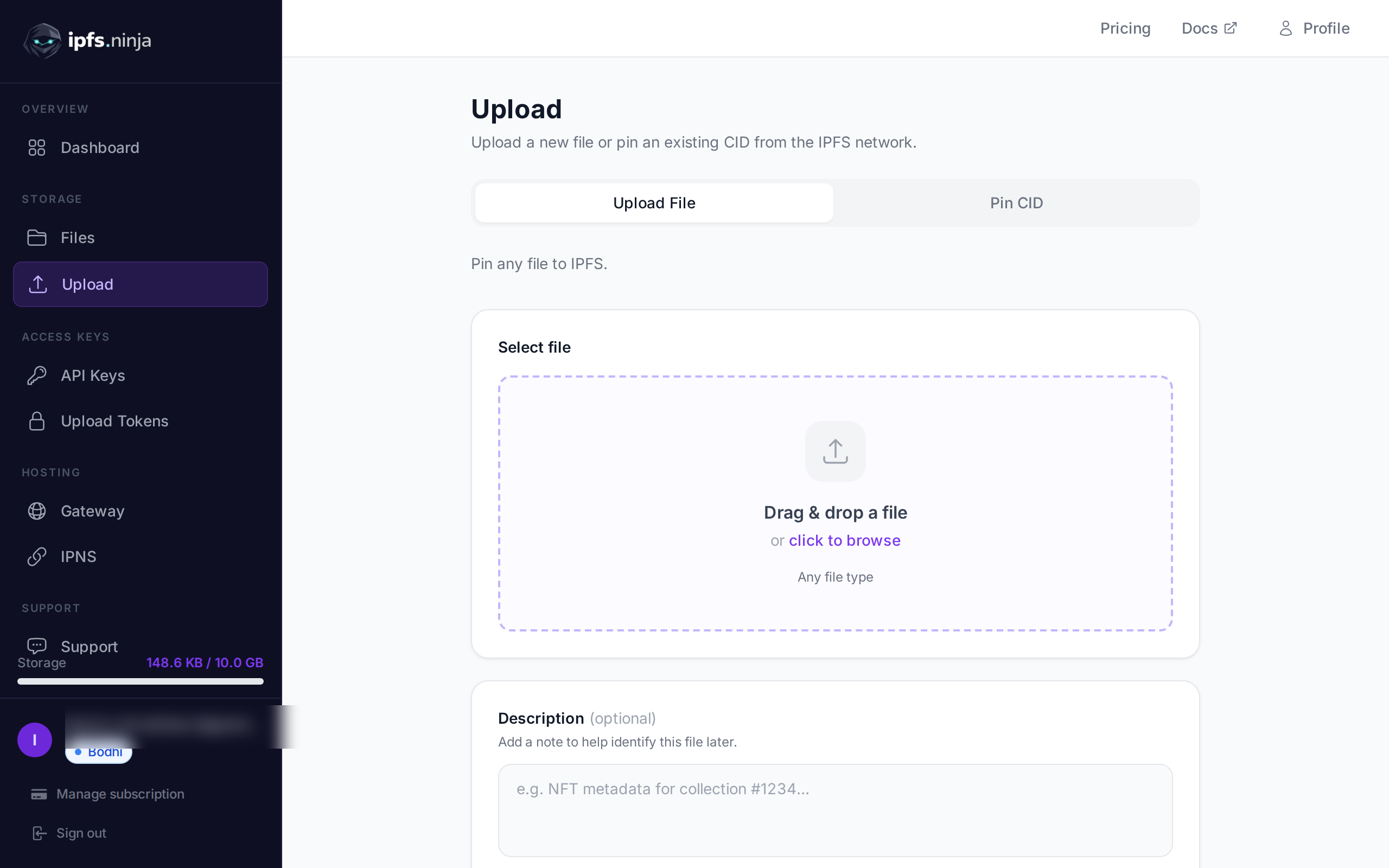
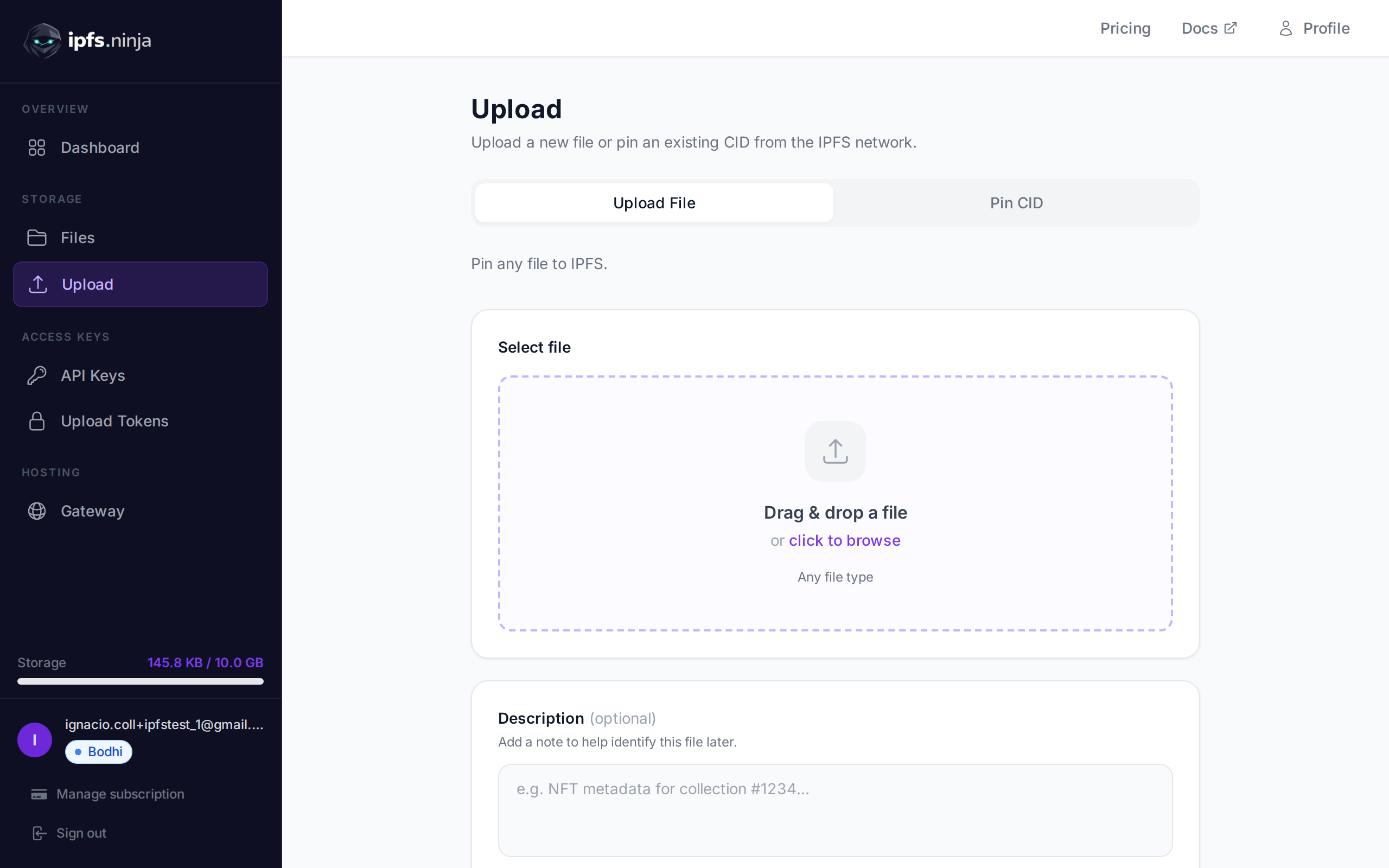
피닝을 시작할 준비가 되셨나요? 무료 계정 만들기 — 50개 파일, 1 GB 저장소, 월 2 GB 대역폭. 신용카드가 필요하지 않습니다.

작성자 소개
Nacho Coll
Founder & Engineer at IPFS.NINJA
Nacho founded IPFS.NINJA to make content-addressed storage feel as simple as an S3 PUT — a single API call, a permanent CID, no wallets or peer discovery to reason about. Writes about IPFS internals, decentralized storage patterns, and the pinning-service landscape from the operator side of the wire.